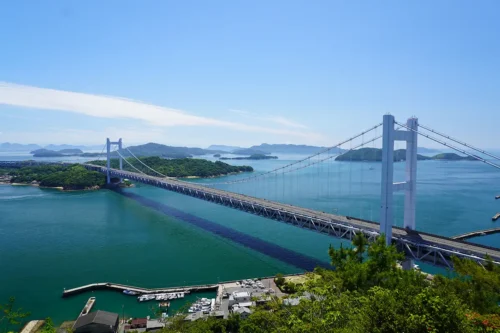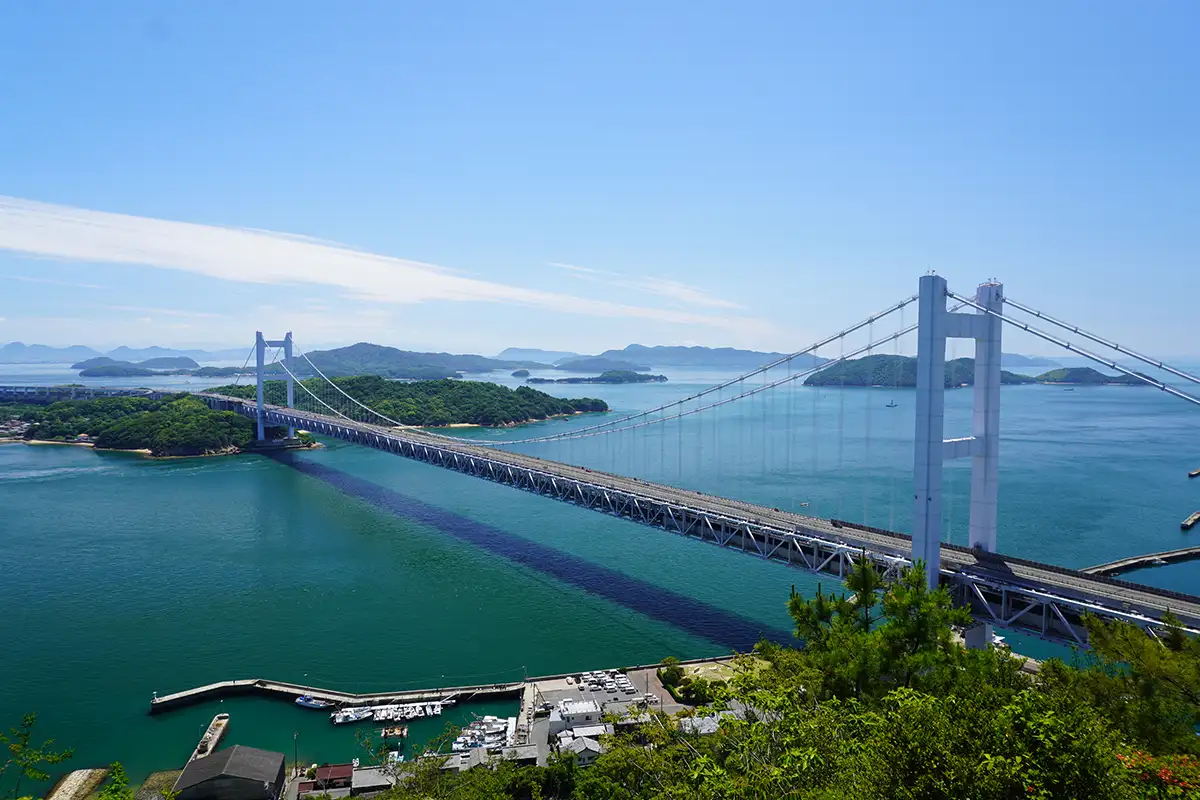
If you are visiting Okayama, the sweeping views of the Seto Inland Sea, dotted with islands and crossed by the Seto Ohashi Bridge, are something you really should not miss. The Seto Ohashi Bridge is one of the Honshu-Shikoku Bridge routes, connecting Kojima in Kurashiki City, Okayama Prefecture, with Sakaide City in Kagawa Prefecture. The name “Seto Ohashi” is commonly used for a group of bridges centered around six massive bridges spanning the strait. These include the Shimotsui-Seto Bridge, the Hitsuishijima Bridge, the Iwakurojima Bridge, the Yoshima Bridge, the North Bisan-Seto Bridge, and the South Bisan-Seto Bridge.
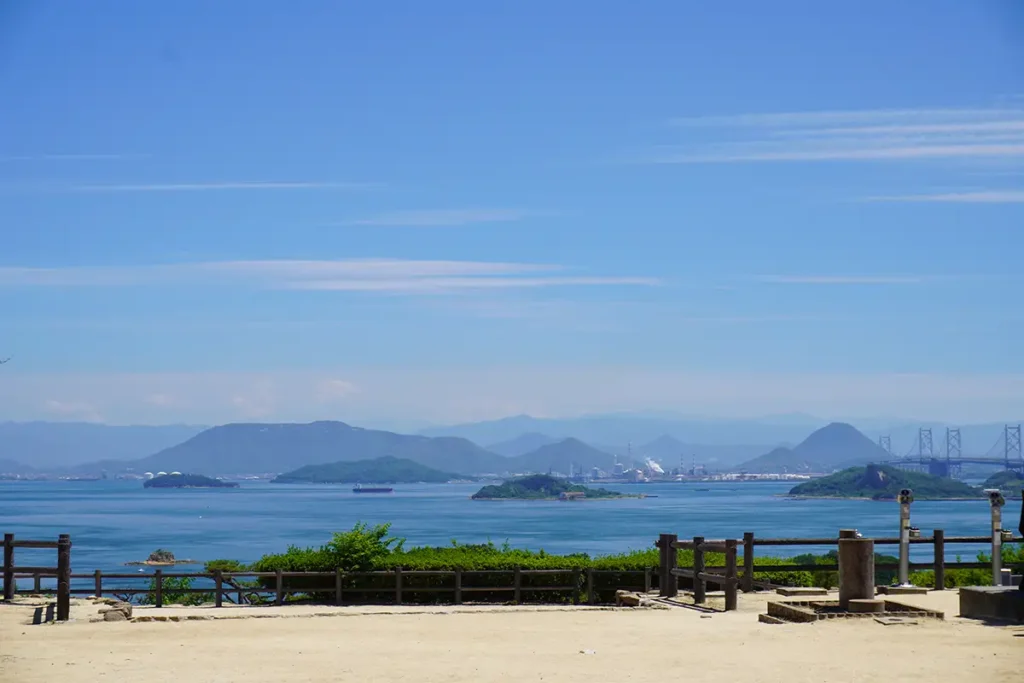
There are several places on the Okayama side where you can enjoy views of the bridge, but two especially popular spots are Ojigatake and Washuzan Observatory. Sitting on opposite sides of Kojima, known as the “jeans town,” they each offer a very different kind of Seto Ohashi experience.
The best part? These two scenic spots are only about 30 minutes apart by car, so you can easily visit both in one trip. This time, we at Nishitabi headed out to compare them.
Ojigatake: Giant Rocks, Big Views, and Maybe a Little Fear of Heights
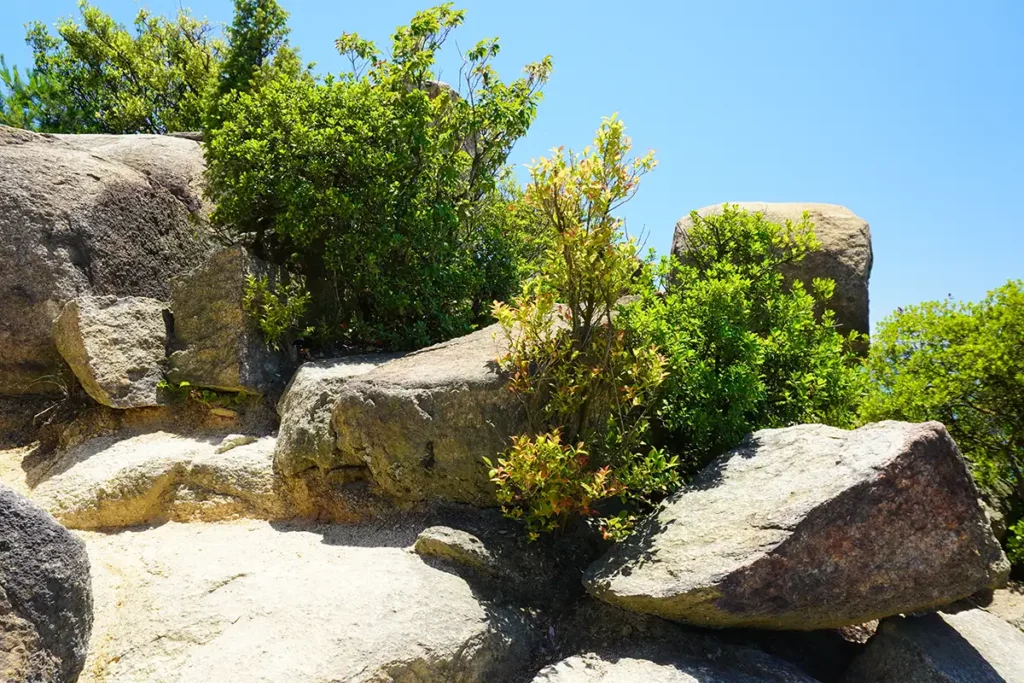
Ojigatake is a mountain about 234 meters high, stretching across Tamano City and Kurashiki City. Its name comes from a legend that eight princes, born to a princess from Baekje (an ancient kingdom on the Korean Peninsula), once lived here. The area is famous for its rugged “badland” terrain, formed as massive granite from around 95 million years ago was weathered and eroded over time. The result is a dramatic landscape filled with huge boulders and strangely shaped rocks.
If you are driving from Okayama Station, head south on National Route 30, turn onto Prefectural Route 427, then turn right just before Omocha Okoku. You will soon see signs for the Ojigatake Park Center. The drive takes about 40 minutes. From Kurashiki Station, it is also about 40 minutes via Prefectural Route 21. From Kojima Station, the closest station, it takes around 17 minutes by car using the Oji Marine Road.
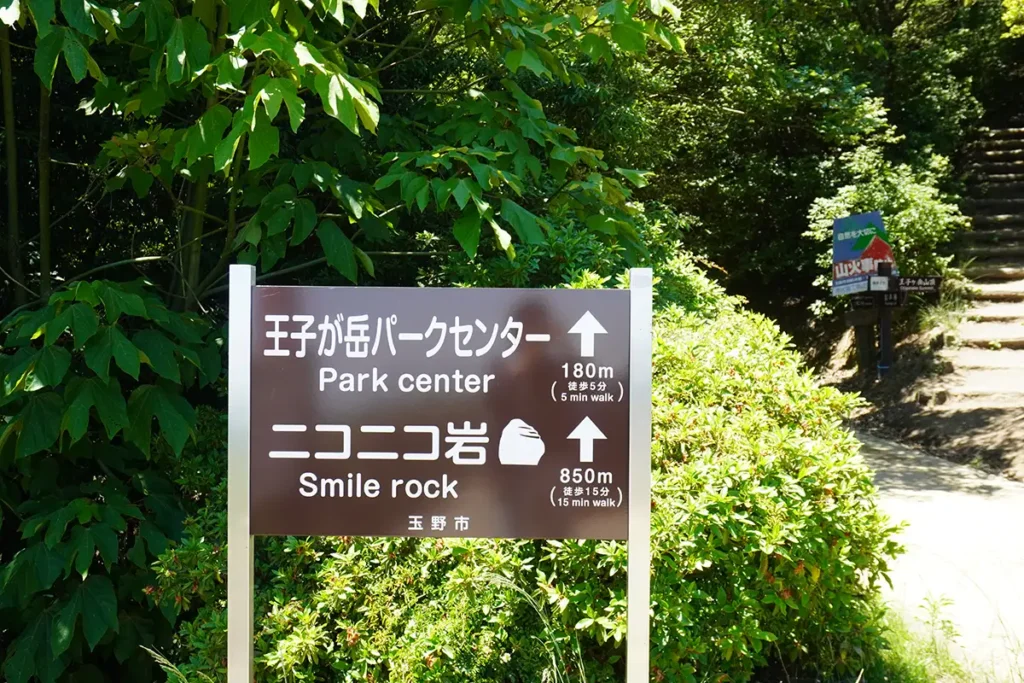
There are three parking areas, all free. If you are heading to the famous “Nikoniko Rock,” Parking Lot No. 1 is the most convenient.
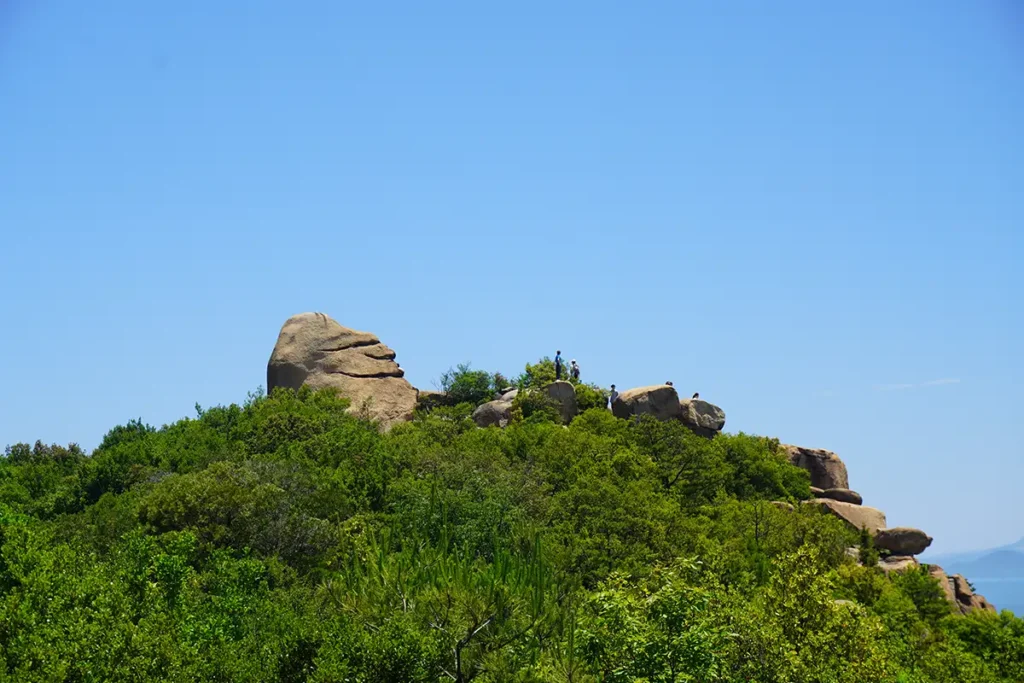
Nikoniko Rock is the symbol of Ojigatake. It gets its name from three cracks in the rock that, from a distance, look like the side profile of a smiling face. Seen from afar, it almost looks like a giant face peeking out from the surrounding forest. Up close, though, it is a huge boulder more than five meters tall, and it has real presence.
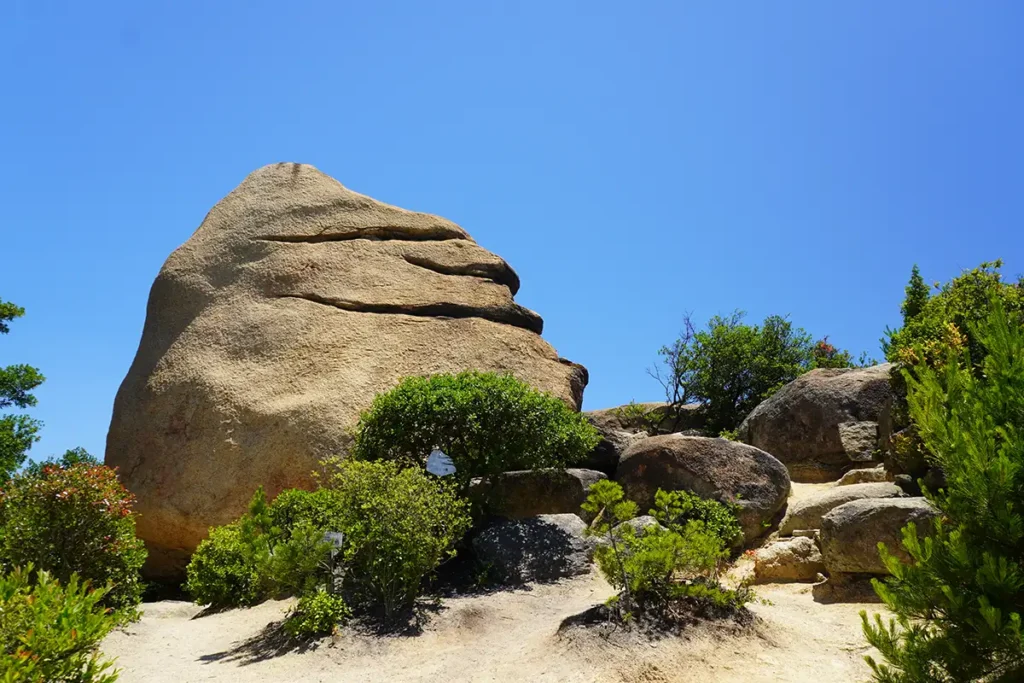
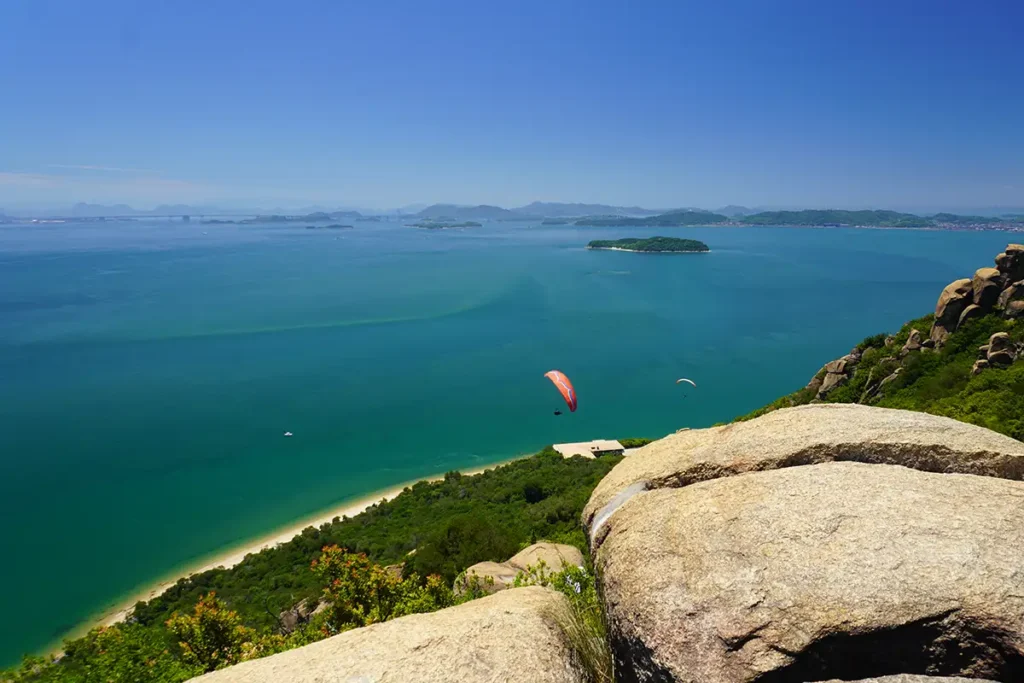
Just in front of the rock, another massive boulder juts out toward the cliff. From the top, you get a panoramic view of the Seto Inland Sea. From Ojigatake, you can see the North and South Bisan-Seto Bridges stretching from Yoshima toward Sakaide in the distance. To the left, you can also look out over the sandy beach of Shibukawa and Otsuchijima, an uninhabited island affectionately nicknamed “Onigiri Island.” Fun fact: the northern half of Otsuchijima belongs to Okayama Prefecture, while the southern half belongs to Kagawa Prefecture.
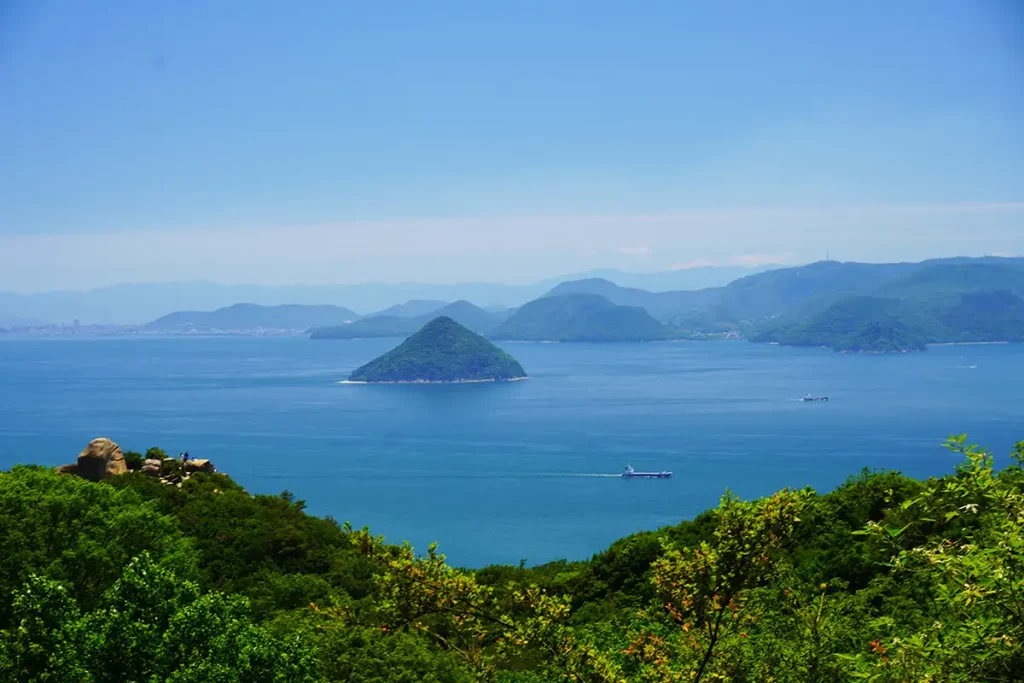
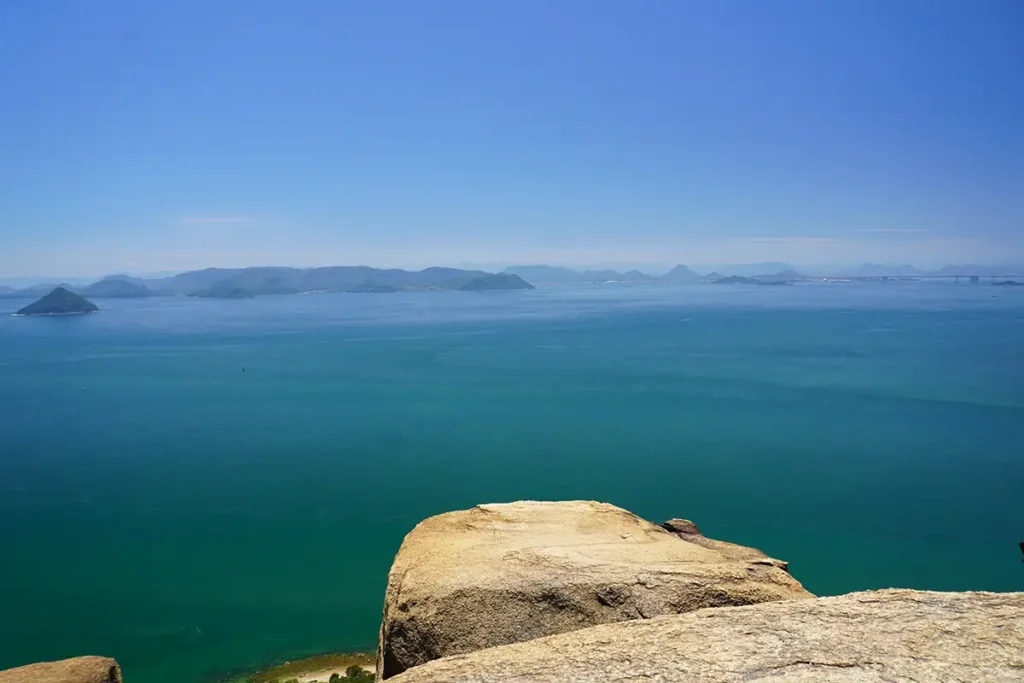
The view from the rocks is spectacular, but looking down can be a bit nerve-racking. Climbing onto the overhanging boulder definitely takes some courage. As someone who is not great with heights, I decided to pass.
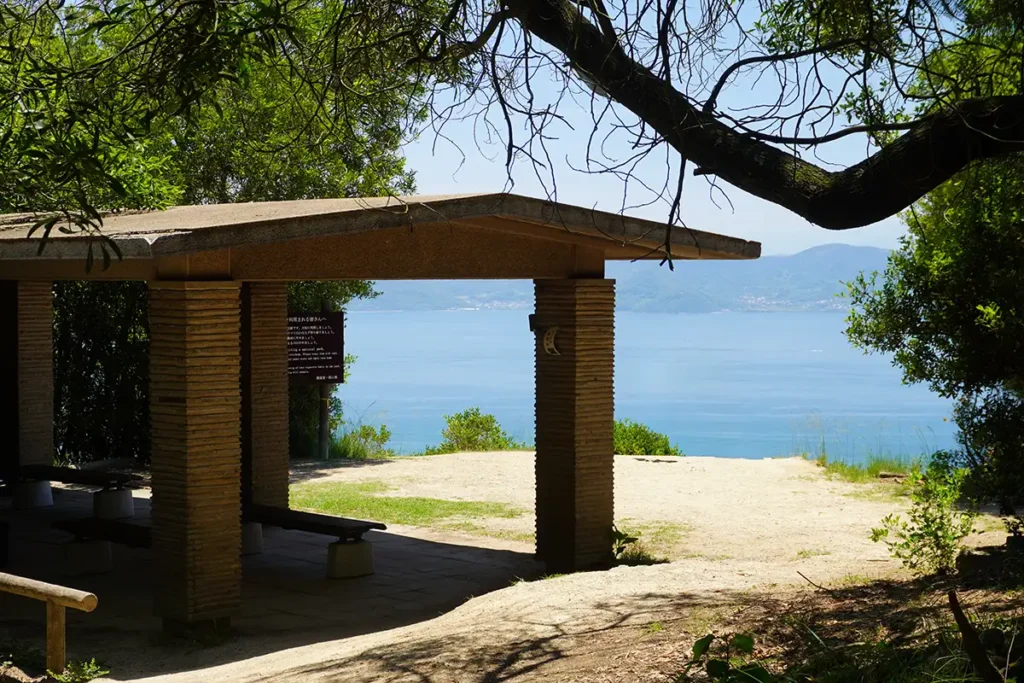
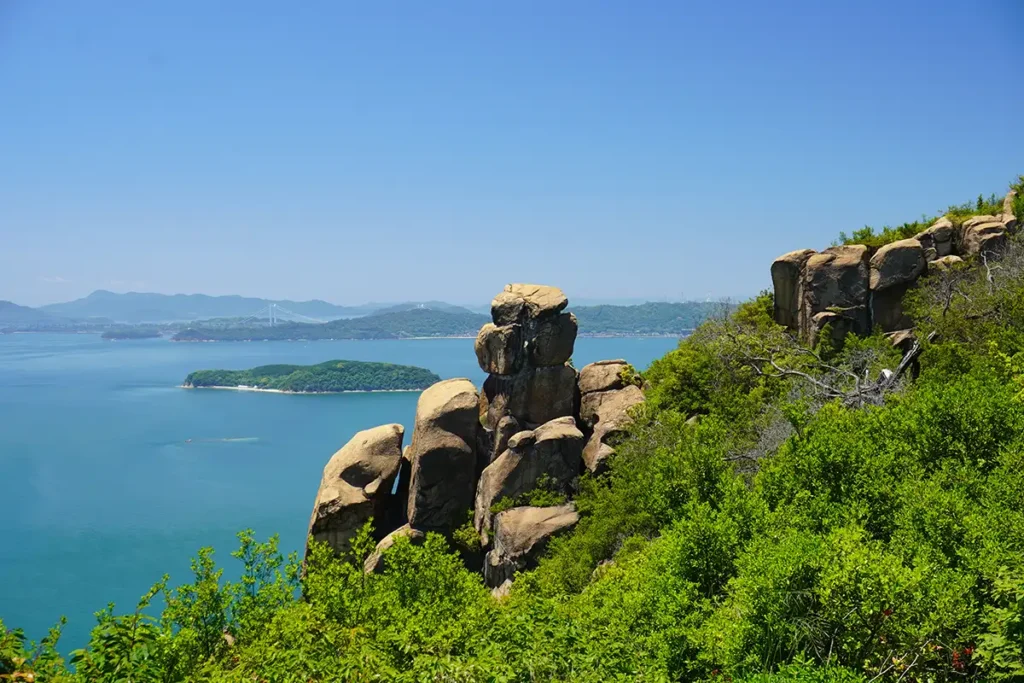
It takes about 15 minutes on foot from the parking lot to Nikoniko Rock, walking slowly along slopes, steps, and mountain paths. There are no restrooms or vending machines near the rock, so if you visit during the hot summer months, comfortable clothes and heatstroke precautions are a must. Along the way, there are plenty of places to stop and enjoy the scenery, including a rest area overlooking Todai Rock, where giant stones are stacked together, and benches with views of the Seto Inland Sea. It is the kind of place where taking your time is part of the fun.
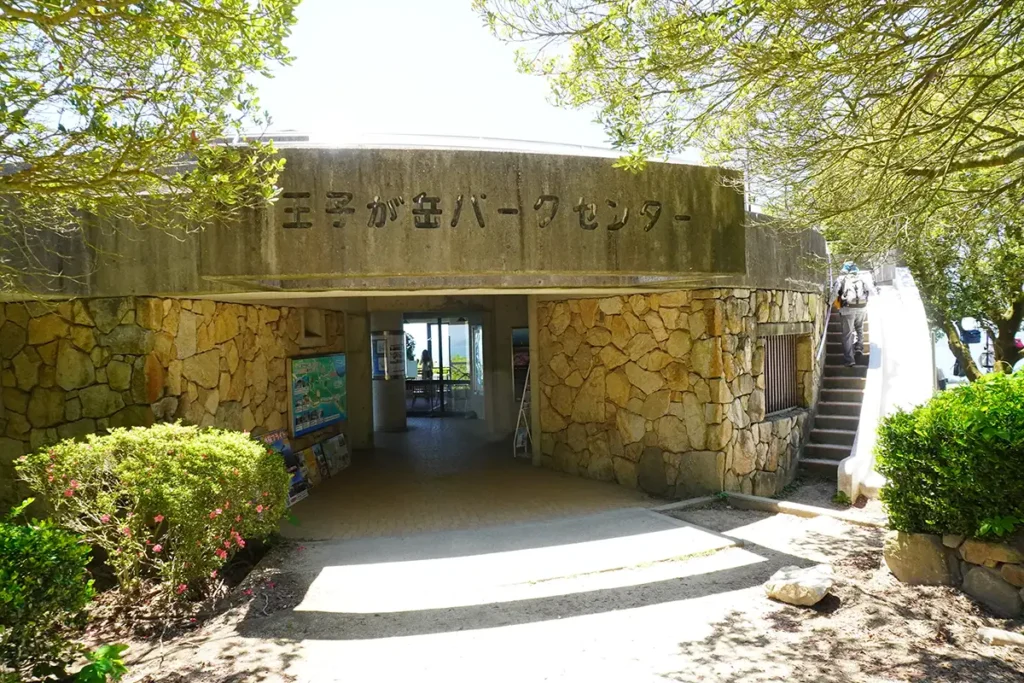
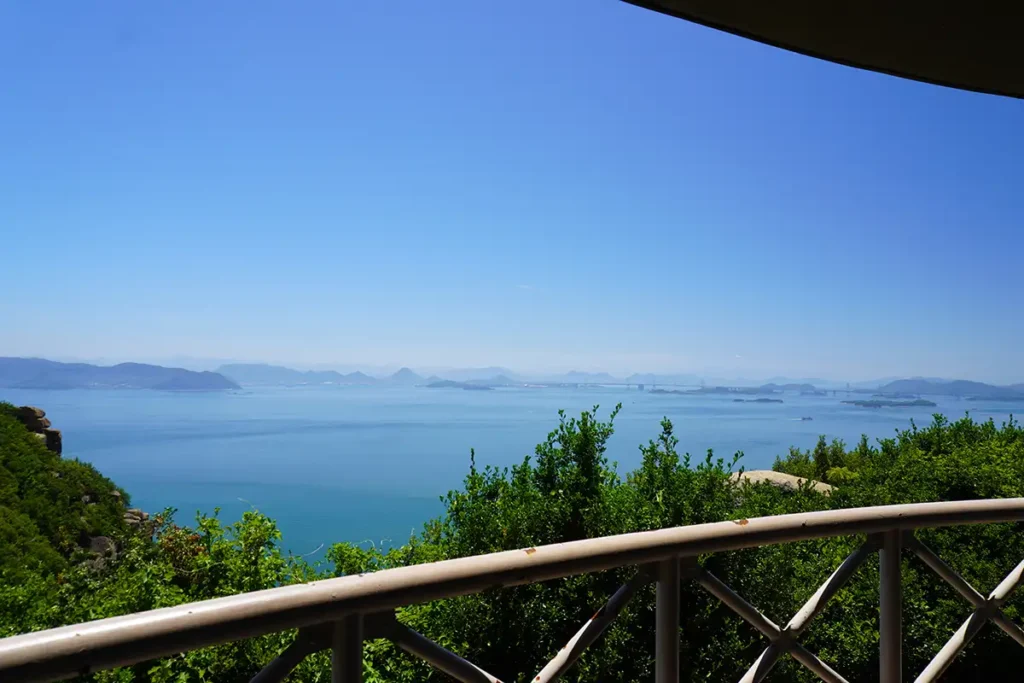
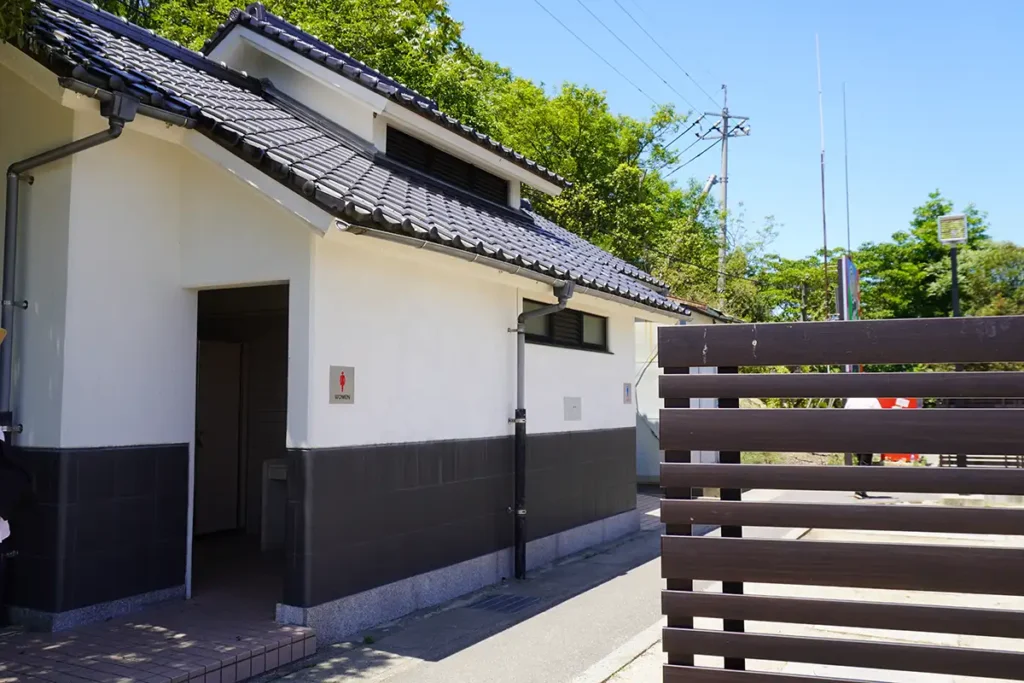
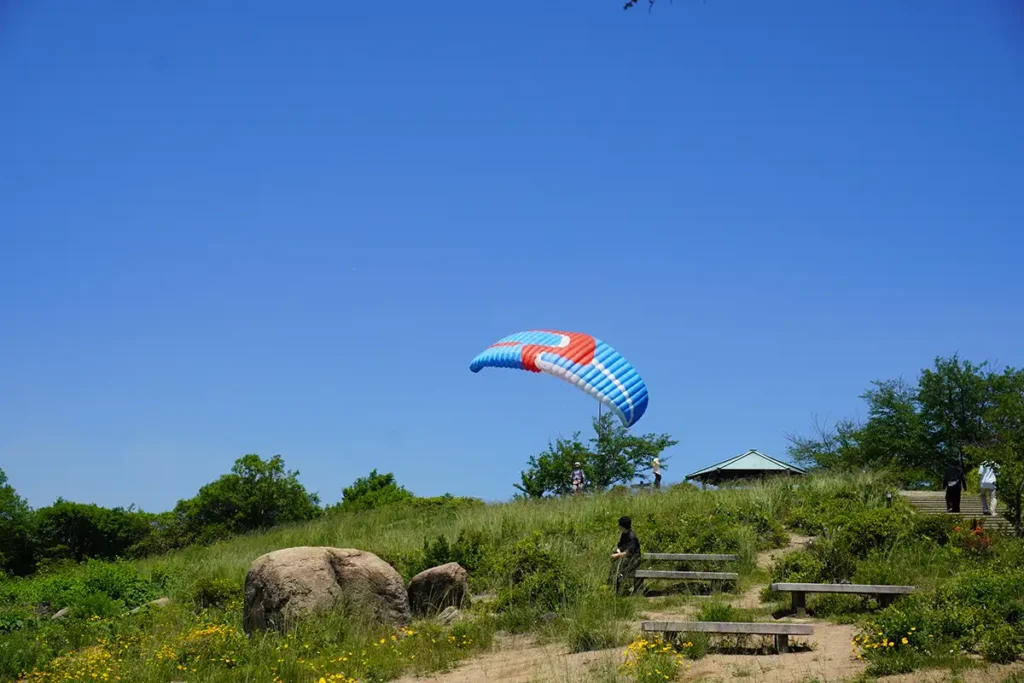
On the way back to the parking lot, you will find the Ojigatake Park Center. Inside are restrooms and a café, making it a handy rest stop. Next to the center is the Ojigatake Paraglider Area, where trial flights and lessons are held. On the day we visited, bright orange and yellow paragliders were gliding through the sky, standing out beautifully against the blue sea and green hills.
施設インフォメーション
| Spot Name | Ojigatake |
| Address | 4-chome Shibukawa, Tamano City, Okayama 706-0028, Japan |
| Parking | Available — three parking areas near the summit |
| Access | By car: About 20–25 minutes from Kojima IC on the Seto-Chuo Expressway, or about 60 minutes from central Okayama City. By public transportation: About 50 minutes from JR Okayama Station to Uno Station, then about 40 minutes by bus to Ojigatake Kokuminshukusha-mae, followed by about 45 minutes on foot to the summit. Alternatively, take an express bus from JR Okayama Station toward Shibukawa for about 70 minutes, then use a taxi or walk after getting off. |
Washuzan Observatory: The Seto Ohashi Bridge Up Close
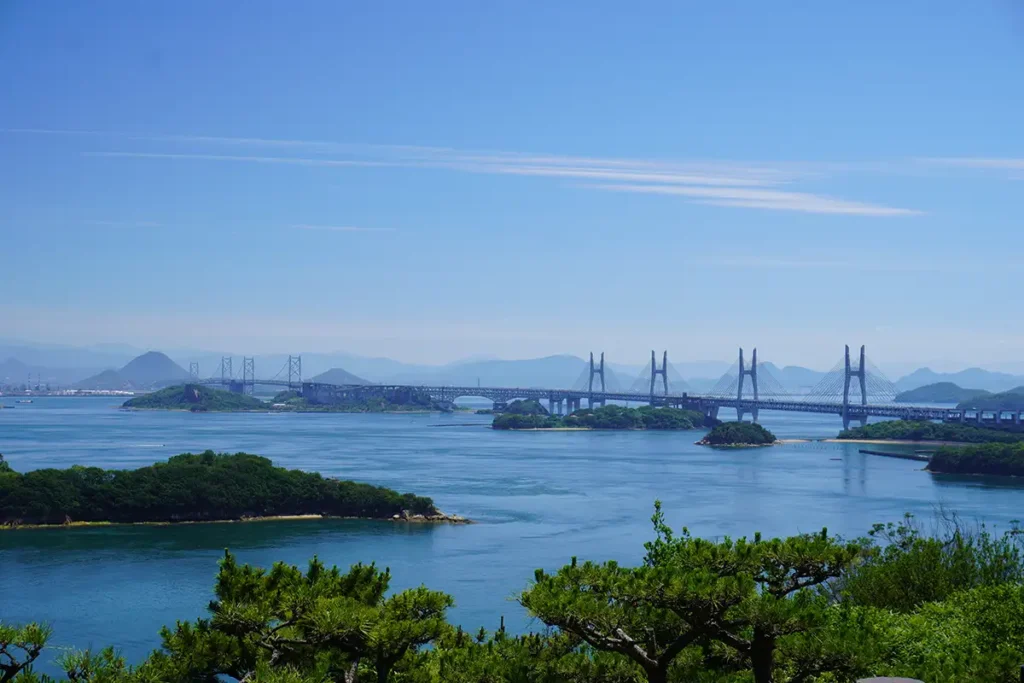
Across the Kojima urban area from Ojigatake is Washuzan. From Ojigatake, it takes about 30 minutes by car via the Oji Marine Road to reach Washuzan Observatory. If you are coming from Okayama or Kurashiki, take the Seto-Chuo Expressway and get off at Kojima IC. From there, it is about 10 minutes.
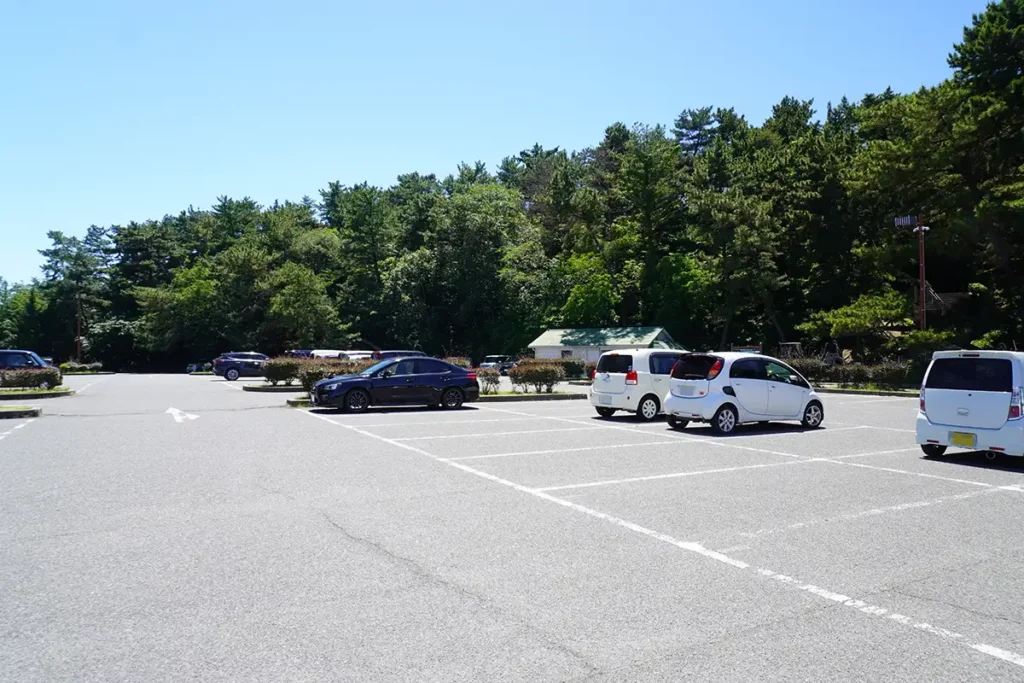
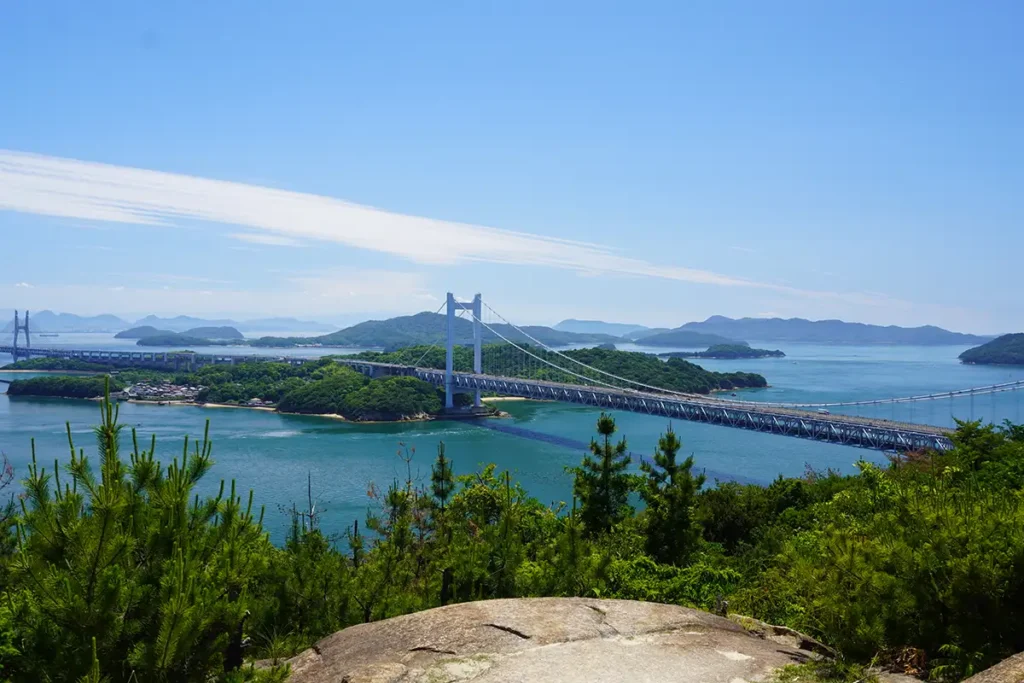
If you are driving a private car or rental car, you can park at the free Washuzan small vehicle parking lot. From there, just climb the nearby stairs and you will quickly reach the Washuzan Second Observatory. This spot gives you an impressive close-up view of the Shimotsui-Seto Bridge. There is also a parking area near the observatory for wheelchair users and people who have difficulty walking, making Washuzan easier to visit than Ojigatake.
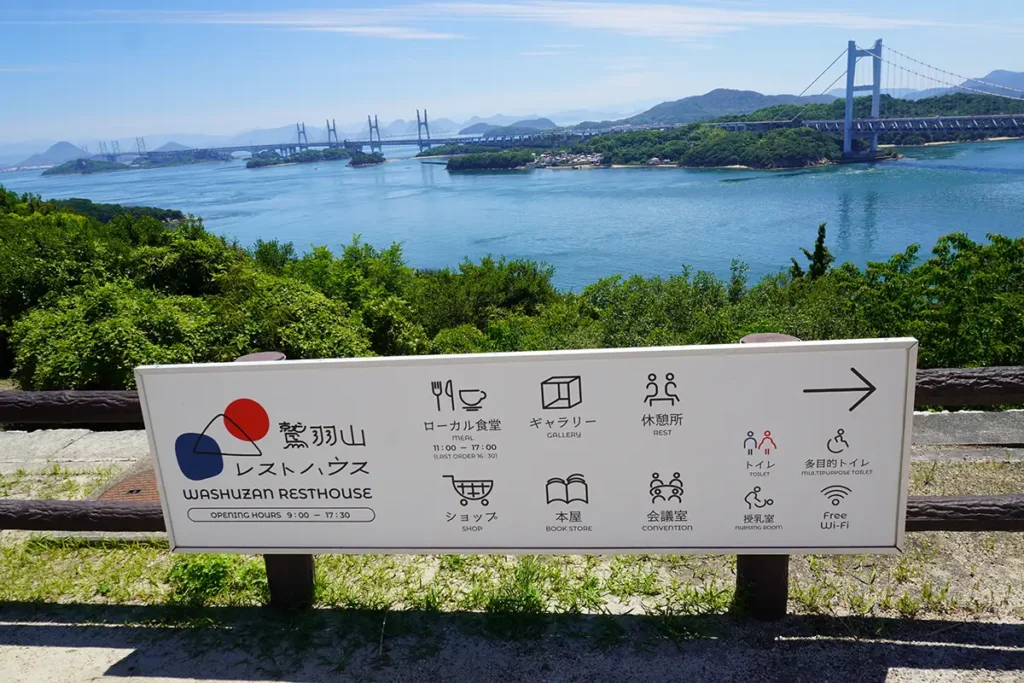
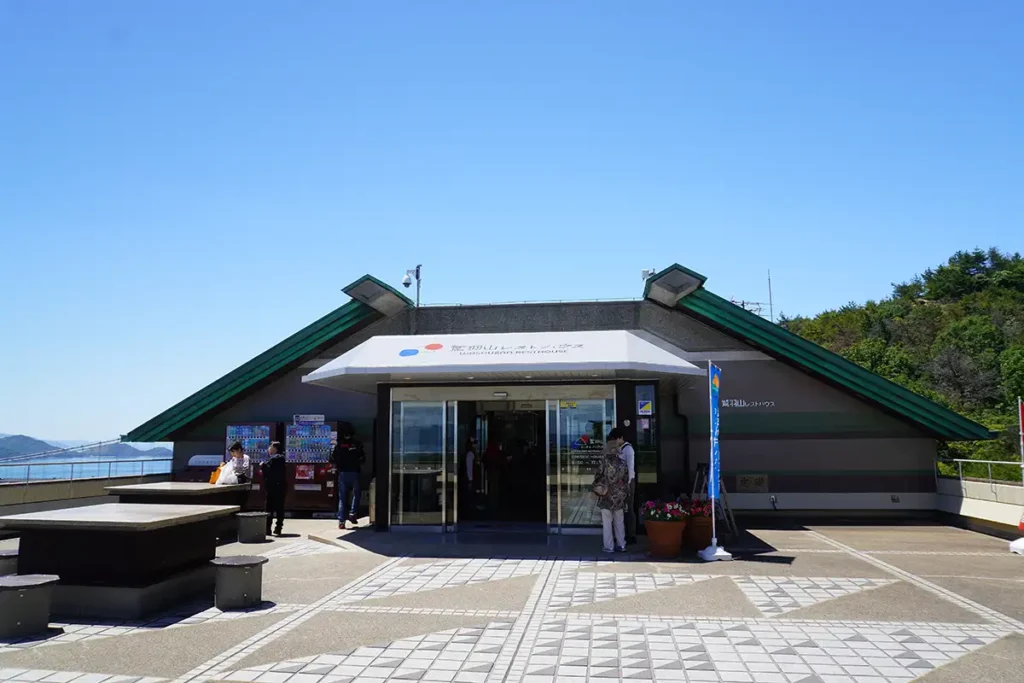
Next to the observatory is a rest house. The fourth floor has a select shop and gallery, the third floor has a casual local restaurant, and the second floor is a bookstore. At the select shop, you can buy soft serve ice cream and drinks, as well as local souvenirs such as prepared foods made with eggs from Sakamoto Keiran, blue Kojima udon, denim goods, and other Kurashiki products.
There is also a terrace beside the shop where you can step outside and enjoy the view of the Seto Ohashi Bridge. From here, the bridge feels incredibly close. You can clearly see cars moving across it and even the fine details of the suspension bridge structure. At the third-floor restaurant, dishes include “Shimotsui octopus rice with Setouchi sashimi” and fried chicken or tonkatsu made with pork and chicken from Okayama Prefecture.
We visited in the afternoon, so the sun was already starting to sink behind the bridge. Because of the backlight, the bridge looked a little darker. According to our guide, the bridge looks brighter and whiter in the morning. They also recommended visiting at low tide, when you can see the currents flowing toward Kyushu and Kansai. Apparently, it is quite a sight.
Washuzan is also chosen as one of the “100 Best Sunset Spots in Japan.” At dusk, the bridge turns into a silhouette, creating a dreamy, almost cinematic view.
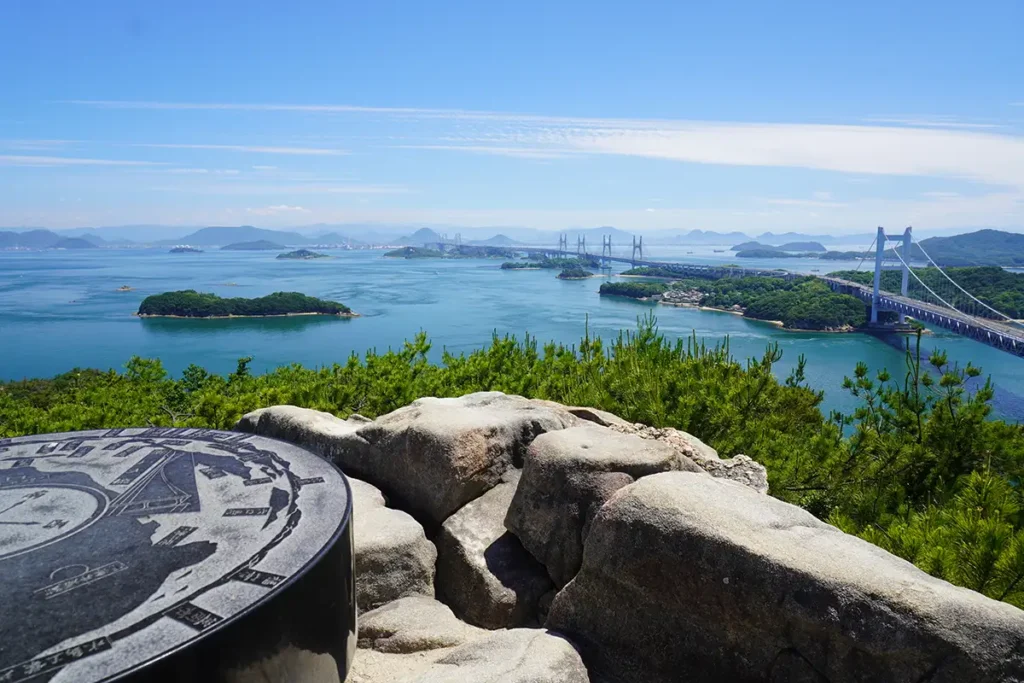
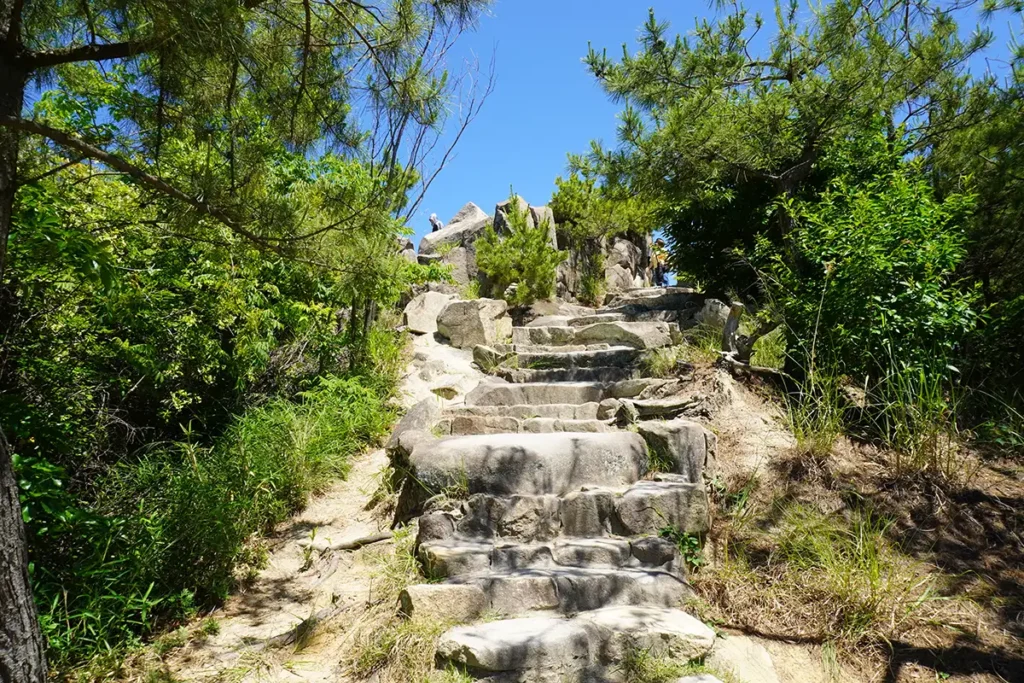
About 10 minutes on foot from the rest house is Shoshumine, the summit observatory. The path gets a little steep and rocky, and we had to climb while looking for the best route forward. Once at the top, though, you get a full 360-degree panorama. We could see the Seto Inland Sea, nearby Washuzan Highland, and even the distant Shikoku Mountains. The summit itself is quite narrow, with only enough space for a few people. In the center, there is a circular guide showing what can be seen in each direction.
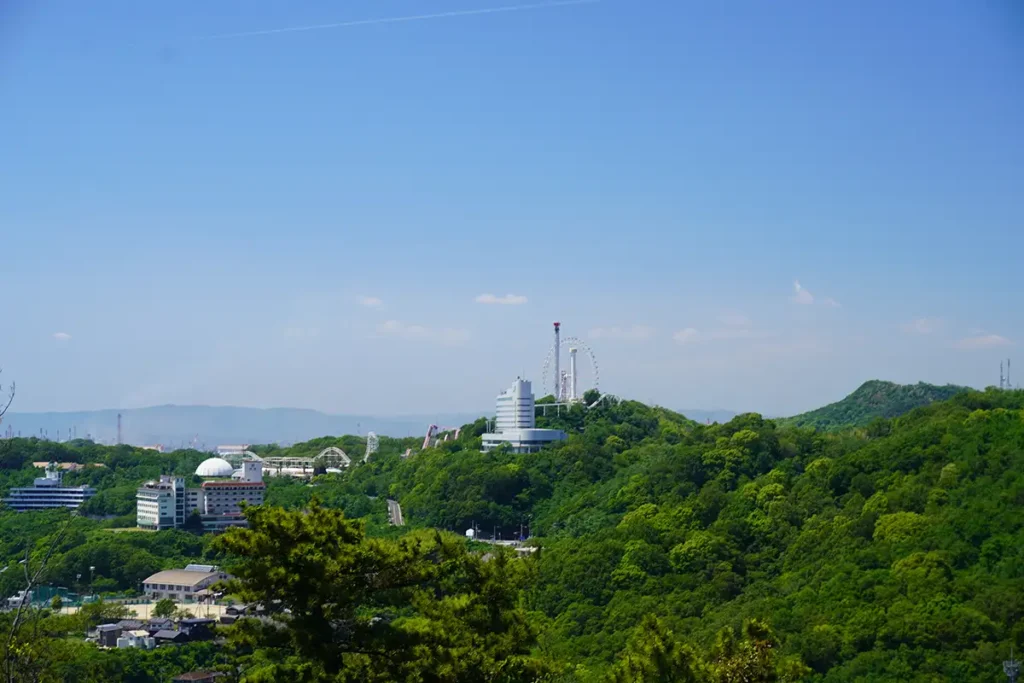
We did not have time to visit it this time, but about 20 minutes on foot from the rest house is the Azumaya Observatory, where you can look down on the Seto Ohashi Bridge from above. Along the way, you can also find the Washuzan Kofun Group, and the views of the Seto Inland Sea continue throughout the walk. With multiple observatories and scenic points scattered around the area, Washuzan lets you enjoy the grand Seto Ohashi Bridge from many different angles. Add in the birdsong and sunlight filtering through the trees, and it is a surprisingly refreshing little escape.
| Spot Name | Washuzan Observatory |
| Address | Shimotsui Tanoura, Kurashiki City, Okayama 711-0925, Japan |
| Parking | Available. Free parking for 366 standard cars, including 4 accessible parking spaces, and 45 large vehicles. |
| Access | By car: About 5–10 minutes from Kojima IC on the Seto-Chuo Expressway. By public transportation: About 30 minutes by Shimotsui Loop Line bus from JR Kojima Station. Get off at “Washuzan Second Observatory,” then walk about 5 minutes. |
Final Thoughts: Better Than Expected, and Definitely Worth the Trip
Thanks to the good weather, both observatories were lively with visitors. As we passed people along the way, we kept hearing comments like “I’m glad we came” and “This is even better than I expected.” The scenery is beautiful in photos, of course. But seeing the panorama spread out in front of you while feeling the sea breeze makes the experience much more powerful.
Crossing the Seto Ohashi Bridge is also a memorable way to appreciate its massive scale. But viewing it from an observatory gives you a different kind of appreciation. You can feel not only the size of the structure, but also the achievement and dedication of the people who built it within this natural landscape.
One of the events that led to the construction of the Seto Ohashi Bridge was the Shiun Maru accident in 1955. In dense fog, two ferry boats, the Shiun Maru and the Third Uko Maru, collided. The accident left 168 people dead or missing, including 100 elementary and junior high school students on school trips. It became one of the five major postwar accidents involving Japanese National Railways. After the tragedy, momentum grew for building a bridge that would allow people to cross the Seto Inland Sea more safely. Construction of the Seto Ohashi Bridge began in 1978, and after about nine and a half years of difficult work, the full route opened on April 10, 1988.
Today, there are three Honshu-Shikoku Bridge routes: the Kojima-Sakaide route, which includes the Seto Ohashi Bridge; the Kobe-Naruto route; and the Nishiseto Expressway, also known as the Shimanami Kaido. Of these, the Seto Ohashi Bridge is the only one that can be crossed by train. The view from the train window as it travels across the Seto Inland Sea is a special experience you can only have here.
There are many other places to enjoy the Seto Ohashi Bridge too, including views from Shimotsui Port and the Washuzan Highland side. If you visit Okayama, take some time to enjoy these sweeping views while thinking about the people who brought this enormous bridge to life.
Ojigatake vs. Washuzan Observatory: Quick Comparison
| Category | Ojigatake | Washuzan Observatory |
|---|---|---|
| Main appeal | Unusual rocks, giant boulders, and paragliders | Powerful close-up views of the Seto Ohashi Bridge and sunsets |
| Walking distance | 10–15 minutes from the parking lot to Nikoniko Rock | Just a few minutes to the Second Observatory |
| Accessibility | Many slopes and rocky areas, so it can be a little challenging | The area around the rest house is well maintained |
| Recommended for | Active travelers who want a bit of adventure | Families and visitors who want an easy scenic stop |